So, Why Do I Want to Do a PhD?
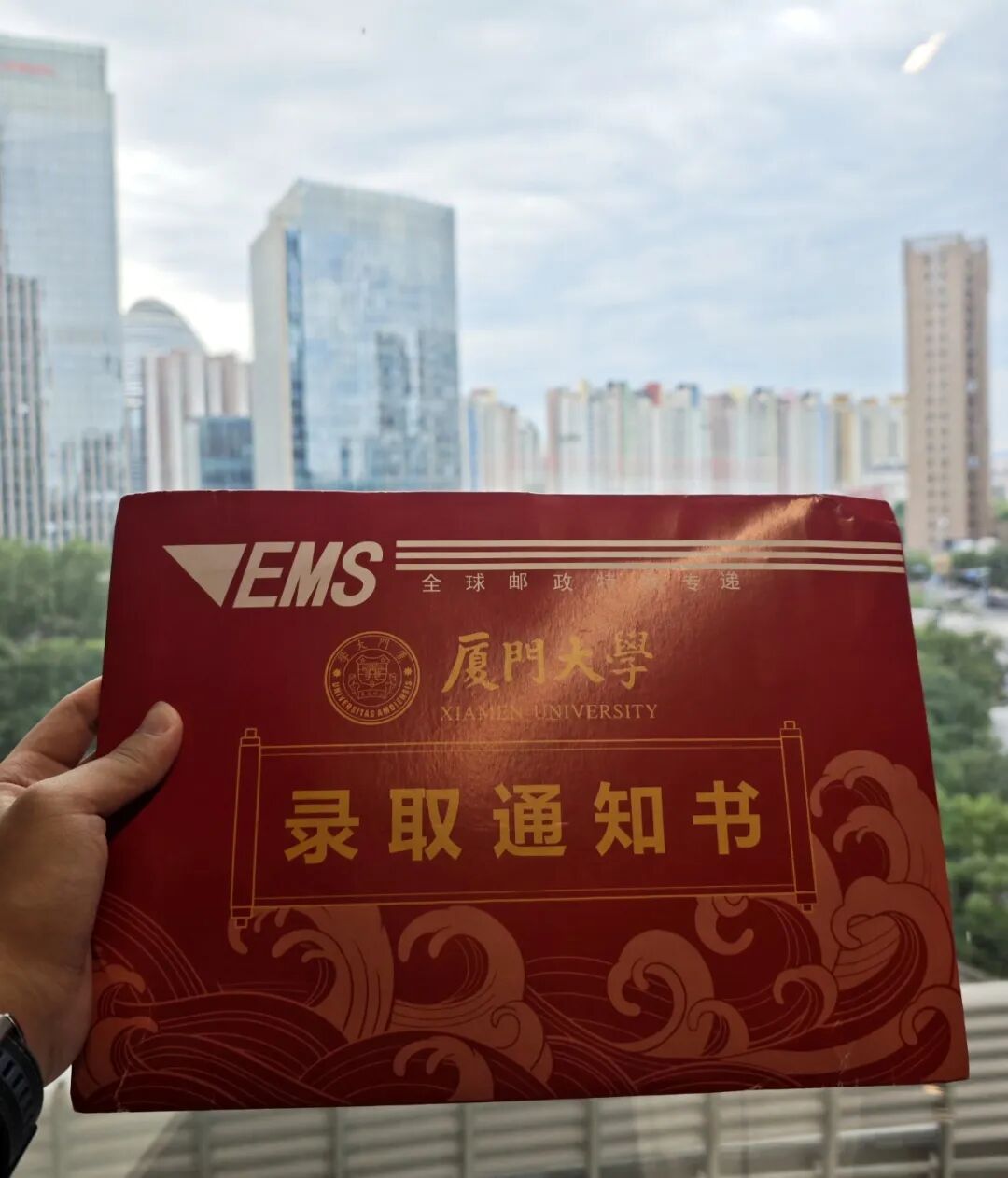
It has been almost a month since my admission letter arrived. Now that it is official, I feel I owe myself an honest answer about why I want to do a PhD.
It has been almost a month since my admission letter arrived.
I kept thinking I should write something about it. Somehow, I kept putting it off.
When the letter actually came, I wasn’t quite as excited as I had imagined. By this time last year, doing a PhD had already become a fairly definite plan. What I felt was closer to this.
Okay. It’s finally official.
And perhaps because of that, I felt I should stop and give the question some serious thought.
Why do I want to do a PhD?
It sounds like something I should have figured out long ago. I haven’t, really. At least, I don’t have a particularly romantic answer.
Recently, I came across an argument on X about whether a PhD is a job or a privilege.
One side argued that a PhD is an unusual privilege. You get several years to read, think, run experiments, and fail, without having to produce immediate economic value. If you want to do extraordinary research, the argument went, you should be willing to make an extraordinary commitment, including some sacrifices.
The advice on the other side was to “Treat your PhD like a job.”
I could see what both sides meant. I couldn’t quite agree with either in full.
If I had to answer now, I would probably put it this way.
A PhD is a job. It is also a privilege.
For me, though, it may first of all be a long-term investment in myself.
I have never been someone who felt they absolutely had to get a doctorate, whatever the circumstances.
If a really good research offer came along now, I could very well take it. I would want to do work that mattered, work that would still contribute to my abilities and track record years later. Spending my time building short-lived add-ons to satisfy a quarterly KPI would be much less appealing.
I have never thought that doing a PhD is inherently better than taking a job.
And of course a well-paid role at a major tech company appeals to me.
But if I went straight into one after my master’s, I’m not sure I would be especially optimistic about where I stood.
I would probably be another cog in the machine.
The salary might be good. The company name might look impressive. But what would I have left when I moved on a few years later? How easily could I be replaced by someone with a similar background? Those questions matter to me.
I don’t want to settle so early for a life that feels more or less decided.
It may sound unoriginal, but I do want to go further.
I want to reach a little higher and see what is there. To meet people I can learn from, spend time in better places for research, and do things I am not yet capable of doing.
I also want my future self to have more choices.
I would like some say in the decision, beyond waiting to find out whether somebody else wants to hire me.
Where do I want to go? Who do I want to work with? What do I want to spend several years doing?
That may be the most immediate reason I want to do a PhD.
I am also increasingly unwilling to pretend that my motives are as pure as I might once have imagined.
“I don’t care about papers. I just love exploring the unknown.”
I can’t honestly say that, at least not now.
I care a lot about results.
I want to publish more papers. Eventually, I want a few substantial pieces of work that I can be proud to put my name on.
I would like to intern with an excellent research team at a major company. If I still want to stay in academia after my PhD, I want to be a credible candidate for a faculty position at a strong university.
I even care about titles, qualifications, and what people call social recognition.
I used to feel that admitting this made me sound insufficiently devoted to research.
But the more I think about it, the less reason I see to hide it.
If a doctorate offered me no greater ability, no opportunities or resources, and no additional choices, I would not spend years pursuing it just for the three letters.
Many things in society have meaning because people give them meaning.
Universities, papers, degrees, jobs, even the idea of success itself.
I want the work to matter in its own right. I also want that value to have some effect on my actual life.
I hope it becomes work I can show people and a record they can trust. I hope it leads to jobs I can choose, and preferably to a better income and a better life as well.
I have no desire to set research against those things.
Even my view of publication counts is probably less idealistic than some people would like.
Right now, I want to do more work.
I think quantity can, over time, change the quality of what you do.
When you have barely completed a few projects, even your sense of what makes a good problem may be something you have borrowed from other people.
Doing more projects means getting things wrong, chasing a few trends, and finishing some work that later turns out not to have been especially interesting. Through that experience, I think you gradually learn what actually matters.
If I reach a point where I have done a substantial amount of work, I expect I will naturally become more selective.
I will start asking myself questions like these.
Is this really worth six months of my time?
What will remain once this problem is solved?
But I don’t think I have reached the point where I can casually announce that I care only about quality.
For now, I want to become someone who can consistently get things done.
Then I can keep asking more of myself and do them better.
As for work and life, I don’t have a particularly rigid set of rules.
I don’t think a PhD has to fit into a nine-to-five schedule. I also don’t think a good PhD student needs to work fourteen hours every day.
When a deadline is approaching, I can accept a stretch of intense work.
When a problem suddenly becomes fascinating, it seems perfectly normal to still be thinking about it in bed at night.
There may be periods when I give up my weekends or spend less time having fun. I could move to another city, or another country, for a better opportunity.
I can accept those things.
But years of poor sleep and declining health, justified as dedication to research, would be harder for me to accept.
I am willing to give up some leisure time. I can handle short periods of high intensity.
I don’t want to sacrifice my health over the long term, or wake up one day and realize that papers have taken away all the time I could have spent with my family.
The life I would like is fairly ordinary.
Work well during the day. Talk with people who are good at what they do, and think through interesting problems together.
Ideally, have a little time to myself in the evening.
Sometimes I would keep thinking about research. Sometimes I would play games. Sometimes I would put research out of my mind entirely, and spend time with my family when I could.
It doesn’t sound particularly extraordinary.
But a life that merely looks relentlessly hardworking has never been what I wanted.
I want to have the ability to give something everything I’ve got when it is worth that effort.
I don’t want to prove my commitment by being permanently busy, exhausted, and behind on an endless list of tasks.
Research is hardly a contest to see who can sit in front of a computer the longest.
Lately, I have become more aware that whether a project works out often has very little to do with finding a few extra hours.
Choosing the wrong problem at the start can cost you two months.
Sometimes the most valuable progress comes when you finally admit something to yourself.
“This approach may not work.”
And half an hour talking with someone who knows what they are doing can be more useful than a week of running experiments on your own.
So, yes, I believe some sacrifice is necessary.
If you want more from life, you will probably have to give something up.
I just hope I learn to give up the things that are worth giving up. I don’t want to automatically count hours as effort or suffering as seriousness.
At this point in the essay, I still don’t seem to have a particularly elegant answer to why I want a PhD.
There is an interest in research, and there is ambition.
There is a wish to work in stronger environments, a need for recognition, anxiety about future employment, and a fairly simple reluctance to decide so early what the rest of my life will look like.
I want to find out how far I can go.
I also want to know what I could accomplish with four relatively free years.
By the time I graduate, I hope to have at least a few papers I am proud of.
I hope to know a group of people I will still want to work with for years afterward.
I would like to have been to some of the places I now want to visit, and to have worked with people I currently admire.
I hope I will be doing much better financially, too.
And, if I am allowed to want a little more, I hope I will really have more choices than I do today.
Will I stay in academia? I honestly don’t know.
Maybe I will. Maybe I won’t.
Four years is a long time. My judgment may change completely.
I don’t think I need to settle every question about my life four years from now before I begin.
What I can do is make a choice that seems worthwhile based on what I know today, and then do my best to follow through.
That is why the admission letter doesn’t feel like I have finally made it to safety.
It feels more like a ticket into the next stage.
I don’t yet know what I will see there, what I will manage to do, or where it will take me.
I hope that when I read this again in a few years, I will have changed a lot.
Perhaps I will think I was naive. Perhaps I will laugh at how much I worried about everything.
Either would be fine.
I just hope my future self can come back and tell the person writing this today one thing.
You made the right choices.
Keep going, kid.
You’re going to have a good four years doing your PhD.
Written jointly by me and ChatGPT.